
Summary
Inbound logistics is where plans quietly fall apart and where AI solutions for logistics either prove their value or fail completely. But why do so many organizations still treat inbound operations as routine execution instead of a strategic control point? Why do errors and delays keep repeating even after years of process improvements, new tools, and digital transformation investments?
What if the biggest logistics problems are not happening in warehouses or delivery routes, but at the very first moment goods enter the system? What happens when incorrect inbound data shapes inventory decisions, demand forecasts, and fulfilment plans before anyone realizes that something is wrong? And why do teams keep reacting to delays instead of anticipating them?
As AI in logistics operations becomes more accessible, a bigger question emerges. Is AI being used to automate broken workflows, or to fundamentally change how inbound decisions are made? Can AI for inbound logistics actually prevent errors instead of just reporting them faster? And what would logistics performance look like if volatility were reduced before it spread across the supply chain?
If inbound operations became predictable, would the rest of logistics still need firefighting at all?
Introduction
- According to Gartner, only 23% of supply chain leaders have a formal AI strategy today, even as expectations around AI solutions for logistics continue to rise across global operations.
- PwC research shows that 53% of organizations are already using AI across multiple areas to predict and manage supply chain disruptions, including critical logistics and inbound operations.
- Gartner reports that nearly 90% of supply chain and logistics functions have either started or completed digital transformation initiatives, setting the groundwork for scaling AI solutions for logistics effectively.
- Industry analysis cited by McKinsey indicates that AI-enabled predictive forecasting in supply chain and logistics can reduce operational errors by as much as 50%, significantly improving planning accuracy and inventory control.
- In a Gartner survey, 72% of organizations confirmed that environmental and operational factors directly impact supply chain performance, reinforcing the need for real-time, AI-driven logistics solutions.
AI solutions for logistics are increasingly becoming a priority for enterprises that want predictable growth, lower costs, and reliable delivery performance. Yet most logistics transformation efforts still begin too late in the value chain. Inbound operations are where logistics plans first meet reality, and this is also where the most damaging errors and delays quietly begin. Suppliers arrive late, quantities do not match purchase orders, documents conflict with physical goods, and systems struggle to reflect what is actually happening on the ground. When inbound operations fail, every downstream function is forced to adapt to flawed inputs.
Most logistics inefficiencies do not originate in warehouses or last-mile delivery. They originate at the point of receipt. Once inaccurate inbound data enters inventory systems, planning tools, and forecasting models, organizations begin optimizing around information that was never correct.
Many reports have shown that poor or even bad data quality has led to companies losing 15-25% of their hard-earned revenue.
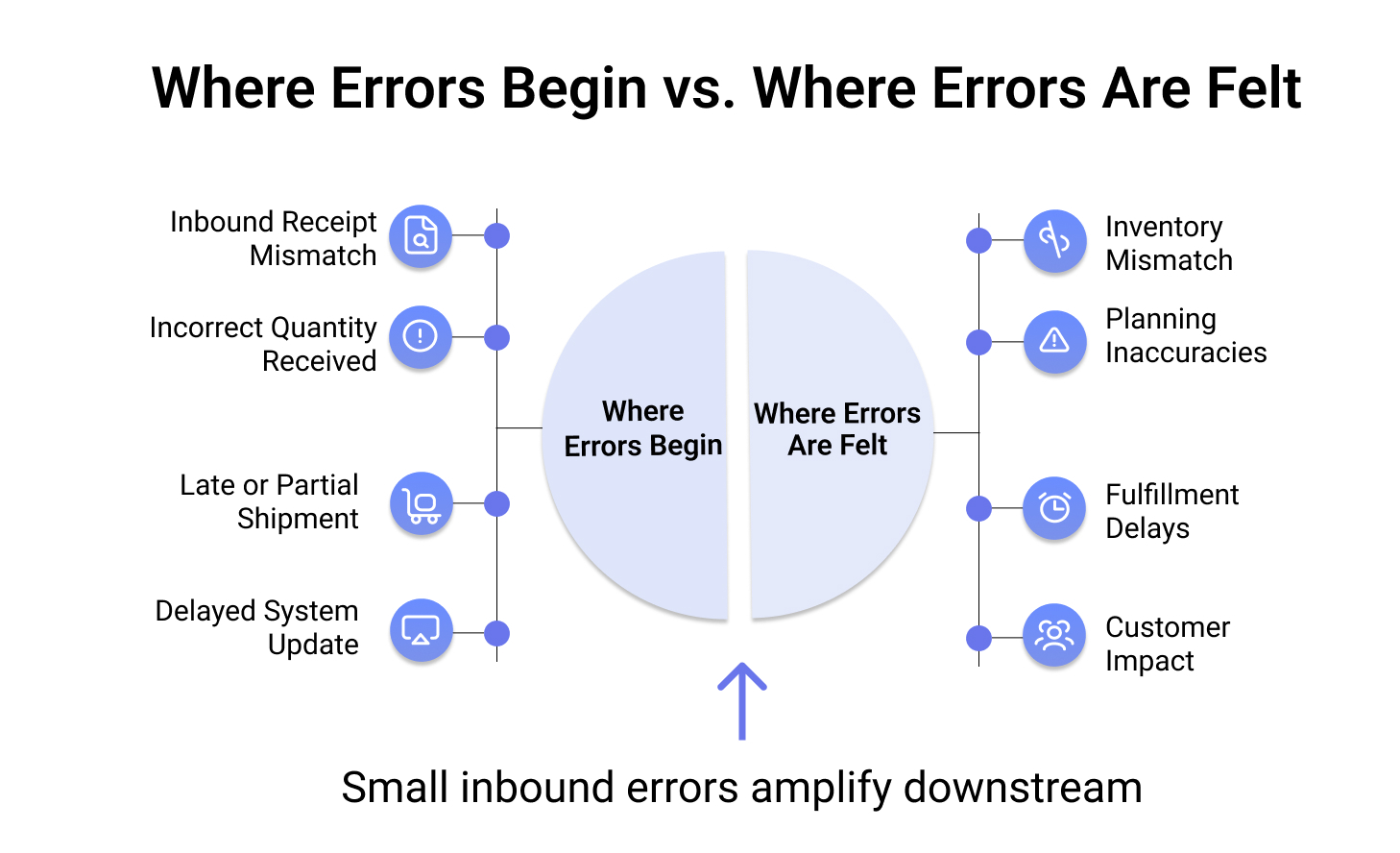
Errors and delays are often treated as operational issues that can be fixed with more staff, tighter SOPs, or additional checks. In reality, they are systemic problems rooted in limited visibility, delayed validation, and reactive decision-making. This is where AI solutions for logistics fundamentally change the role of inbound operations. Artificial intelligence in logistics acts as a decision and control layer, not just automation. It detects deviations early, validates inbound reality in real-time, and prevents bad data from flowing downstream.
In this blog, we explain how AI solutions for logistics address the root causes of inbound inefficiencies. We find out why the traditional inbound processes fail, how AI in logistics operations shifts teams from reaction to prevention, how AI for inbound logistics improves accuracy and timing, and how enterprises can stabilize logistics performance using AI-driven logistics solutions that scale across supply chain management.
The Hidden Causes of Errors and Delays in Inbound Logistics
It is important to find out why inbound logistics continues to struggle despite years of process improvements and logistics automation using AI discussions. The problem is not a lack of effort or experience. The problem is that inbound operations are still designed for a predictable world, while reality is anything but predictable. AI solutions for logistics address these gaps only when organizations understand where errors and delays truly begin.
- Manual Verification and Fragmented Workflows in Inbound Logistics
Inbound operations depend heavily on manual verification at the most stressful moments of the day. Trucks arrive in clusters, docks are limited, and teams are under pressure to unload quickly while maintaining accuracy. In such conditions, even experienced staff are forced to rely on judgment calls rather than certainty. This makes errors more likely, not because teams lack skill, but because the environment is structurally fragile.
Key issues that AI in logistics operations must address include:
- Human checks performed under time pressure
- Visual inspection replacing data validation
- Inconsistent outcomes across shifts and locations
Fragmented systems worsen the problem. Dock scheduling, inventory updates, transport tracking, and documentation often live in separate tools. This creates delays in synchronization between physical events and digital records.
Experience alone cannot scale in such environments. AI solutions for logistics bring system intelligence that works consistently across volume spikes, locations, and operating conditions.
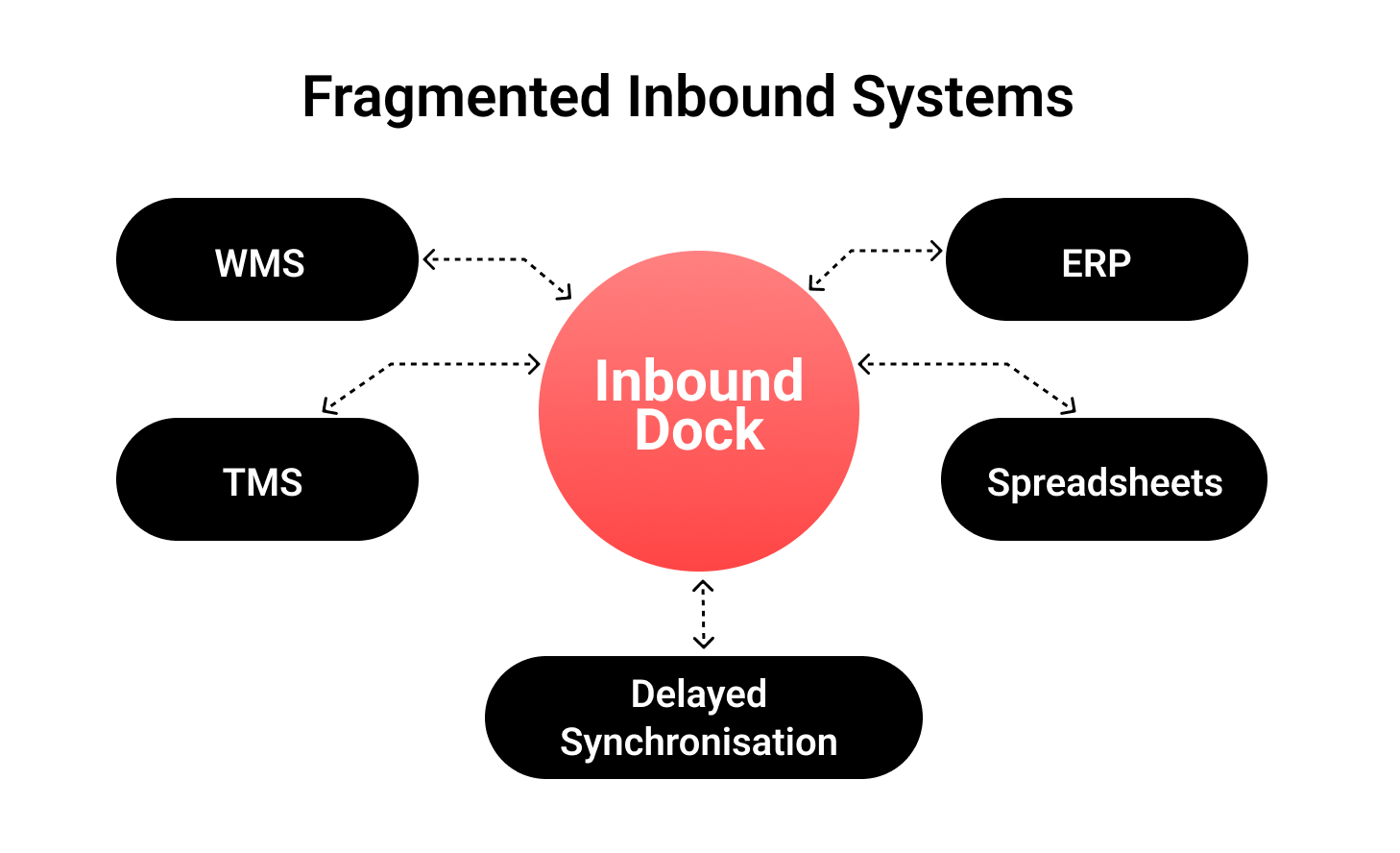
- Mismatch Between Plans, Documents, and Reality in Inbound Supply Chains
Inbound logistics is built on documents that assume ideal execution. Purchase orders, advance shipping notices, and invoices are expected to align neatly with physical receipts. In reality, partial shipments, damaged goods, substitutions, and timing deviations are common.
Common challenges include:
- Gaps between planned quantities and actual receipts
- Delays in updating systems after goods arrive
- Inventory records reflecting assumptions instead of reality
When systems are updated hours or days later, AI-driven logistics solutions become essential. During this delay, planning and replenishment systems operate on incorrect data. Small mismatches quietly multiply into stock inaccuracies and fulfilment issues. This is why AI solutions to reduce logistics errors focus on validating inbound data at the moment of receipt.
- Reactive Operations and Invisible Delays in Inbound Logistics
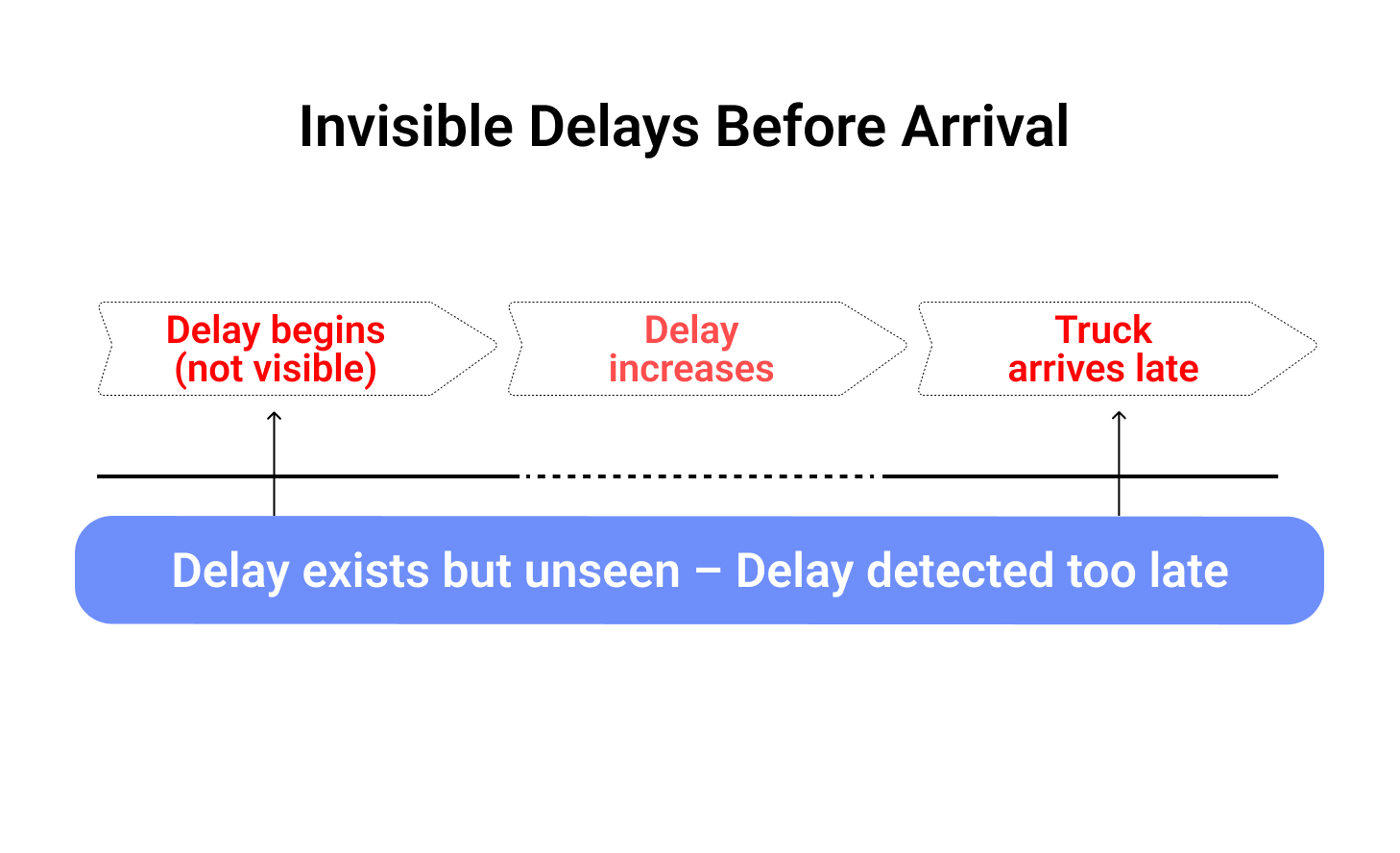
Most inbound delays are not unexpected. They are simply invisible until it is too late. Late trucks are noticed only when they do not arrive. Dock congestion becomes clear only when queues form. Labour shortages surface only after unloading slows down.
Without predictive analytics in logistics, teams are forced into reaction mode:
- Delays are explained after they occur
- Resources are reassigned under pressure
- Firefighting replaces planning
Many reports highlight that supply chain disruptions often cascade because organizations lack early warning signals, not because disruptions are unavoidable.
The deeper issue is not unpredictability. It is the absence of foresight. AI solutions for logistics provide early signals that allow inbound operations to control uncertainty instead of absorbing it. Until these hidden causes are addressed, inbound logistics will continue to destabilize the entire supply chain, no matter how advanced downstream optimization becomes.
Download the handbook
Gaining Competitive Advantage with GenAI Integration
By clicking the “Continue” button, you are agreeing to the CrossML Terms of Use and Privacy Policy.

How AI Solutions for Logistics Reduce Errors and Delays by Shifting Inbound from Reaction to Prevention
AI solutions for logistics fundamentally change inbound operations. Instead of reacting to problems after they spread, AI in logistics operations helps teams prevent errors and delays before they enter the system. This shift from correction to prevention is where measurable logistics ROI begins.
- How AI Solutions for Logistics Directly Reduce Inbound Errors and Delays
Reducing inbound errors and delays requires more than faster processing and additional checks. AI solutions for logistics work by intervening at the precise moments where inbound decisions are made, and data first enters enterprise systems. Instead of correcting mistakes later, AI reshapes how inbound accuracy and timing are handled from the start.
In practice, AI solutions for logistics reduce inbound errors and delays by:
- Preventing incorrect goods receipt entries at the moment shipments arrive
- Identifying partial, delayed, or mismatched inbound shipments before systems are updated
- Removing delays created by manual reconciliation and post-receipt corrections
This approach ensures inbound operations remain accurate, predictable, and resilient before disruptions spread downstream.
- Real-Time Inbound Intelligence Using AI Solutions for Logistics
Traditional inbound logistics relies on audits that happen after goods are received and recorded. By the time discrepancies are discovered, incorrect data has already moved into inventory systems, demand forecasting in logistics, and fulfilment plans. AI solutions for logistics change this sequence by validating inbound reality as it happens.
AI for inbound logistics enables:
- Real-time verification of quantities and conditions at receipt
- Immediate detection of mismatches before system updates
- Reduced dependence on delayed reconciliation reports
By catching errors early, AI solutions are used to reduce logistics errors and stop bad data from spreading. Inbound teams no longer document mistakes after the fact. They intercept them at the source.
- Predictive Arrival and Capacity Planning with AI in Logistics Operations
Inbound delays are rarely random. They follow patterns linked to supplier behaviour, route congestion, weather conditions, and historical deviations. AI-driven logistics solutions use predictive analytics in logistics to identify these risks before trucks reach the facility.
AI-powered supply chain optimization enables:
- Forecasting late arrivals hours or days in advance
- Proactive dock, labor, and space allocation
- Reduced congestion, idle time, and detention costs
Reports suggest that predictive analytics in logistics can reduce supply chain disruptions significantly when applied early in inbound processes.
This approach creates rhythm in inbound logistics. Instead of reacting to delays at the gate, teams plan based on expected reality. AI for reducing delays in inbound logistics improves both speed and reliability.
- Automated Decision Support for Exceptions Using AI Solutions for Logistics
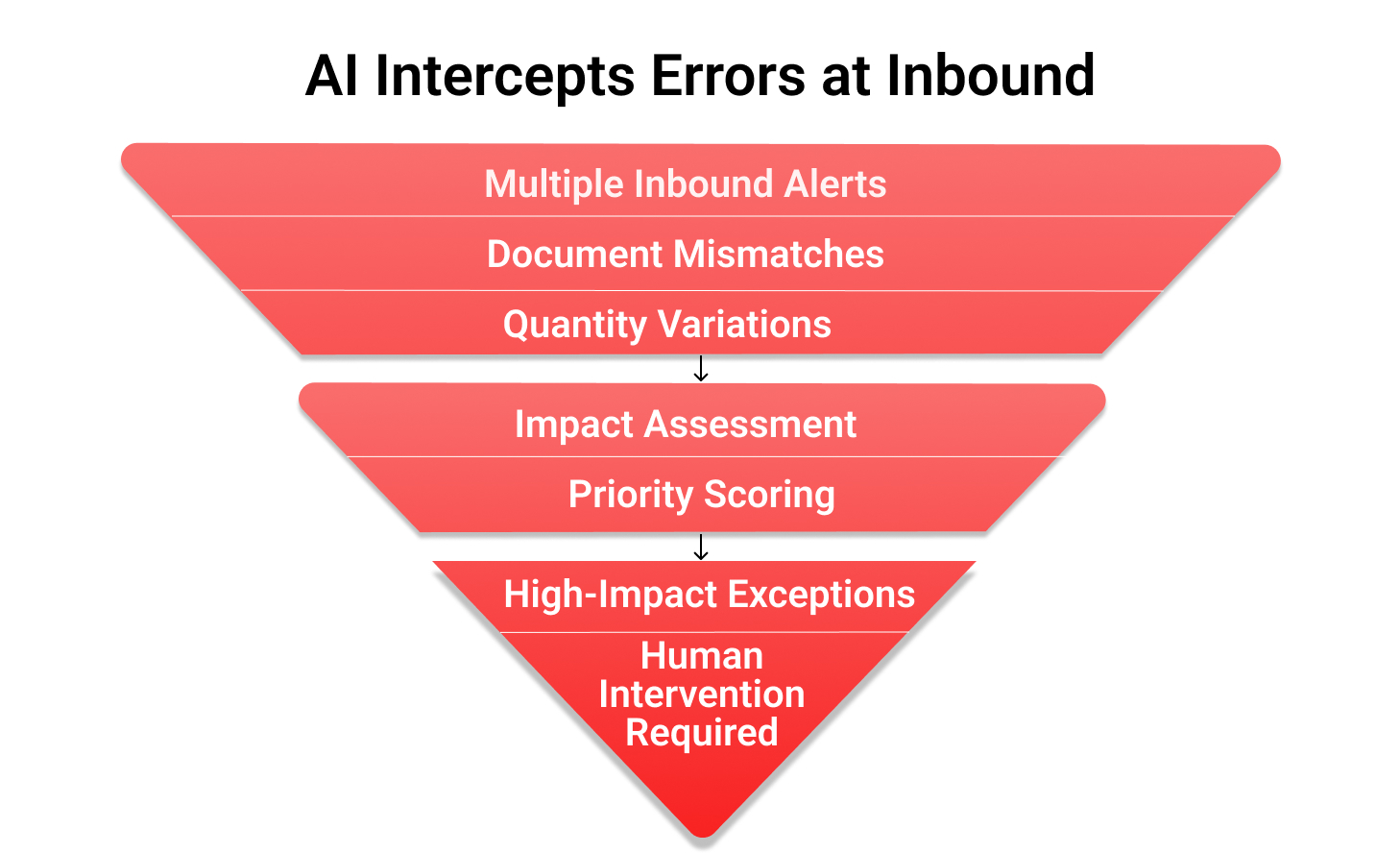
Inbound teams are often overwhelmed by alerts, discrepancies, and manual reviews. Not every exception deserves attention, but traditional systems treat all issues equally. AI solutions for logistics introduce intelligent prioritization.
AI-based inbound supply chain optimization supports:
- Identifying anomalies across physical goods and documents
- Prioritizing exceptions with real business impact
- Guiding teams with context and recommended actions
According to reports, AI-driven operational efficiency in logistics helps to considerably reduce manual exception handling.
This moves teams away from constant firefighting. AI tools for logistics error reduction allow attention to be used deliberately, not reactively.
- Why Stability Matters More Than Speed in AI Solutions for Logistics
The biggest benefit of AI solutions for logistics is not speed. It is stability. By reducing volatility at the inbound stage, artificial intelligence in logistics protects every downstream system.
Preventing variability delivers a higher ROI than optimizing averages. When inbound operations become stable, AI solutions for logistics give the entire supply chain something solid to build on.
From an inbound perspective, stability means fewer receipt errors, predictable arrival windows, and accurate system updates at the point of entry. This is where AI solutions for logistics deliver their most immediate returns, by stopping errors and delays before they spread beyond inbound operations.
How CrossML’s AI Solutions for Logistics Help Stabilize Inbound Operations at Scale
Let us find out how AI solutions for logistics are applied in the real world to stabilize inbound operations, not just optimize them on paper. The focus is on outcomes, reliability, and long-term operational resilience rather than tools or buzzwords.
Designing AI Solutions for Logistics That Work in Real World Inbound Complexity
Inbound logistics rarely follows process diagrams. Partial shipments are common. Documentation is inconsistent. Supplier timelines shift without warning. Exceptions are routine, not rare. AI solutions for logistics must start by accepting this reality.
AI in logistics operations is designed to account for variability from day one, including
|
Instead of assuming clean data, AI for inbound logistics learns from patterns over time. Machine learning in supply chain systems adapts as conditions change, improving accuracy with every inbound cycle. This approach creates intelligent logistics systems that strengthen under pressure rather than breaking when reality deviates from plan.
The outcome is resilient logistics automation using AI that reflects how inbound operations actually behave.
Practical Adoption of AI Solutions for Logistics Without Disrupting Core Systems
Stabilizing inbound operations does not require replacing existing systems. In fact, large scale disruption is often the fastest way to lose trust. AI solutions for logistics work best when they integrate seamlessly with current WMS, ERP, and transport management platforms.
A practical adoption approach includes
|
CrossML’s AI-driven logistics solutions support decision makers rather than replacing them. Transparency, explainability, and consistent results matter more than automation promises. Organizations that deploy AI gradually within existing workflows see adoption rates nearly twice as high as those pursuing large-scale replacements.
This approach ensures AI solutions for logistics become part of everyday operations, not an external layer that teams struggle to adopt.
CrossML Scales AI Solutions for Logistics from Visibility to Action
Visibility alone does not stabilize inbound logistics. Action does. Once AI solutions for logistics deliver clean and timely inbound data, the focus shifts from monitoring to coordination.
CrossML’s AI-powered supply chain optimization enables
|
As confidence grows, AI agents for enterprise environments move beyond alerts to orchestration. Agentic AI workflow models allow inbound operations to learn, adapt, and self-correct continuously. Over time, this builds AI-driven operational efficiency in logistics and long-term resilience.
Conclusion
Inbound operations rarely receive recognition when logistics performs well, yet they are almost always at the root of poor outcomes. As the first point where physical reality enters digital systems, inbound operations define the quality of every downstream decision. When inbound is unstable, inventory management, demand forecasting in logistics, and fulfilment teams are forced to compensate. When inbound becomes predictable, logistics performance improves naturally and consistently.
The true impact of AI solutions for logistics goes far beyond faster processing or basic logistics automation using AI. Artificial intelligence in logistics addresses the real causes of failure, such as delayed visibility, unverified assumptions, and reactive workflows. By validating inbound data in real time, anticipating variability, and stabilizing information flow, AI for inbound logistics prevents errors and delays from spreading across the supply chain. This is how AI solutions to reduce logistics errors and AI for reducing delays in inbound logistics deliver lasting value.
This stability compounds across the enterprise. Accurate inbound data strengthens AI-powered supply chain optimization, improves inventory integrity, supports reliable planning, and enables smoother fulfilment. Further, organizations that stabilize early supply chain data flows can improve service levels while reducing operational costs.
As inbound operations evolve into a strategic control point, AI solutions for logistics shift organizations from reaction to performance.
CrossML helps enterprises achieve this shift by delivering enterprise AI solutions that stabilize inbound operations at scale. As an AI solutions company focused on real-world complexity, CrossML enables predictable logistics performance using practical, outcome-driven AI development services and enterprise AI agent capabilities.
FAQs
AI solutions for logistics improve efficiency by automating data validation, predicting disruptions early, and enabling faster decision-making. This reduces manual effort, improves accuracy, and helps logistics teams operate smoothly even under high volume and variability.
AI solutions for logistics help organizations reduce costs, improve delivery reliability, enhance supply chain visibility, and minimize operational risks. By stabilizing inbound data and workflows, businesses achieve better planning accuracy and stronger end-to-end logistics performance.
AI solutions for logistics reduce inbound errors by validating quantities, conditions, and documents in real-time. This prevents incorrect data from entering inventory and planning systems, reducing rework, miscounts, and downstream disruptions across the supply chain.
Yes, AI solutions for logistics use predictive analytics to identify potential delays before shipments arrive. This allows proactive dock scheduling, labour planning, and capacity adjustments, helping organizations minimize congestion, idle time, and unplanned waiting periods.
The most effective AI technologies for logistics management include machine learning for demand forecasting, predictive analytics for inbound planning, intelligent logistics systems for visibility, and AI agents for coordinating decisions across complex logistics operations.